 October 26, 2026
Your heat pump works harder than a furnace does. It heats in winter, cools in summer, and in a climate like ours it runs a good chunk of the shoulder seasons too. That’s a lot of hours on one piece of equipment.
The good news is that a fair amount of heat pump maintenance is simple enough to do yourself, and doing it makes a real difference in efficiency and lifespan. The rest requires tools, training, and in the case of refrigerant, a federal certification.
Here’s an honest split of what falls on each side.
Why Heat Pumps Need Steadier Attention Than a Furnace
A gas furnace sits idle for roughly half the year. A heat pump doesn’t. The same compressor, coils, and blower handle both heating and cooling, which means the system accumulates runtime year-round instead of seasonally.
That changes the maintenance math. Dirt on an outdoor coil hurts you in July and again in January. A filter you ignore restricts airflow in both modes. Refrigerant that’s slightly low shows up as weak cooling in summer and weak heating in winter, often without an obvious failure to tip you off.
Heat pumps also have parts a furnace simply doesn’t have, like a reversing valve and a defrost control board. Those only matter in heating mode, and they tend to fail quietly until the first genuinely cold week of the year, which is exactly when you need them.
Regular maintenance catches that kind of thing in the fall instead of in January.
What You Can Handle Yourself
Change the Filter
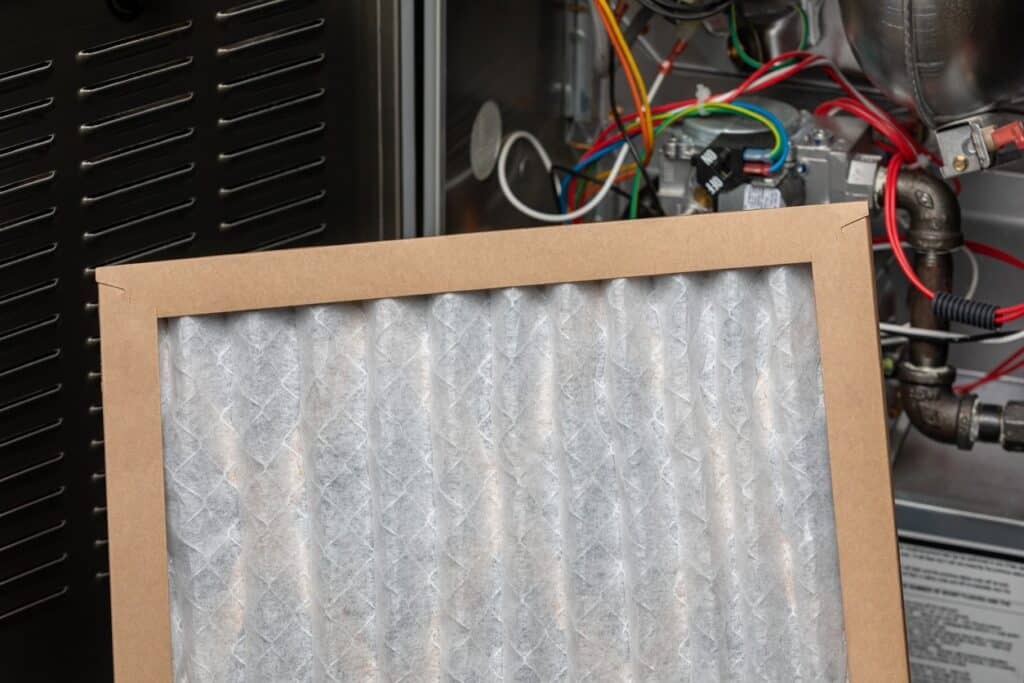
This is the single highest-value thing you can do, and it takes two minutes. Check it monthly and replace it when it looks dirty, which usually means every one to three months depending on pets, dust, and how hard the system is running.
A clogged filter chokes airflow, which makes the blower work harder, reduces how much heat the system can move, and can trigger safety shutdowns. We carry replacement filters if you need one, and it’s worth writing the size down somewhere you’ll find it again.
Keep the Outdoor Unit Clear
Your heat pump pulls air through the outdoor coil, so anything blocking it directly cuts performance. Give it about two feet of clearance on all sides and several feet of open space above.
Pull weeds and trim shrubs back. Clear leaves, bark dust, and grass clippings off and around the unit, especially in fall. In winter, brush snow away from the sides and top rather than letting it pack in.
Two things to avoid: don’t build a cover or enclosure around a running heat pump, since restricting airflow causes the icing problems people build covers to prevent. And if a gutter or downspout drips onto the unit, reroute it. That’s one of the cheapest fixes available and it prevents a lot of winter ice.
Rinse the Outdoor Coil
Once or twice a year, a gentle rinse clears the dust and pollen that build up in the coil fins.
Shut off power at the disconnect box next to the unit or at the breaker first. Then use a regular garden hose at normal pressure, spraying from the inside out if you can reach, or straight on from outside if you can’t. Let it dry before restoring power.
Skip the pressure washer. It bends the fins flat, which blocks airflow worse than the dirt did. Skip harsh chemical cleaners too, and leave the panels on. Anything behind a panel is our job.
Check Your Vents and Returns
Walk the house occasionally and make sure supply vents are open and nothing blocks the return grilles. Furniture, rugs, and curtains all restrict airflow, and closing vents in unused rooms tends to cause more problems than it solves.
Pay Attention
You know your system better than anyone because you live with it. Note if it starts running noticeably longer, if rooms stop keeping up, if your bills climb without a change in habits, or if you hear something new.
Some winter behavior that seems alarming is completely normal, including steam off the outdoor unit, a layer of frost, and air that feels cool from the vents. Knowing which is which saves you a service call, and we’re happy to talk it through over the phone.
What We Handle During a Professional Visit
Refrigerant Charge
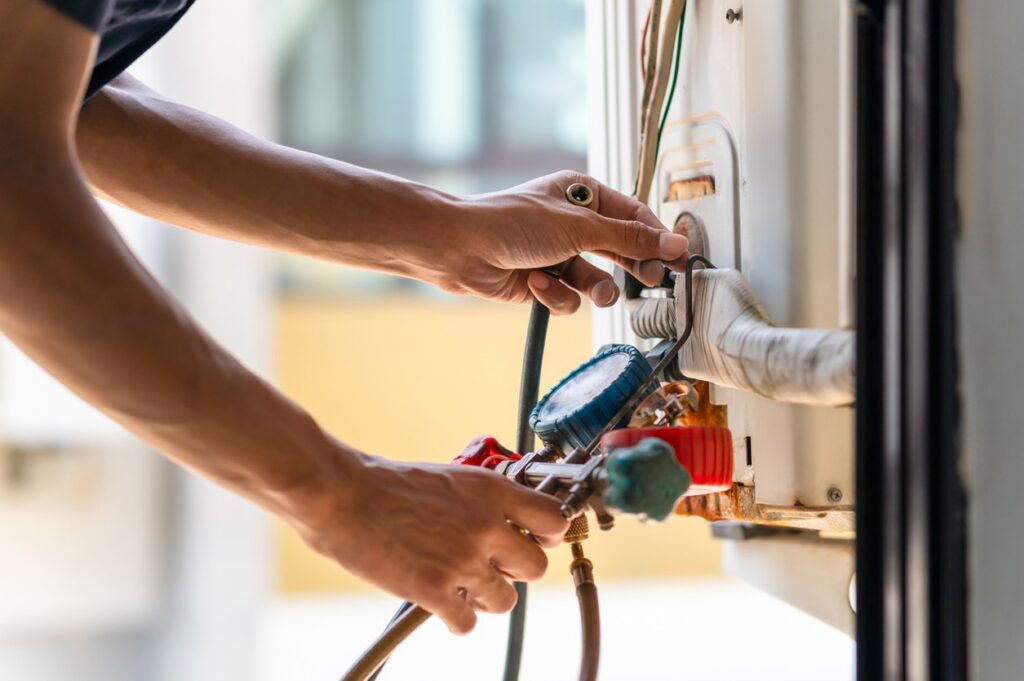
A heat pump that’s low on refrigerant loses capacity in both modes and runs the compressor harder than it should. Checking the charge properly requires gauges and an understanding of what the readings should be for current conditions, and handling refrigerant requires EPA certification.
Low refrigerant also means a leak somewhere, since it isn’t consumed in normal operation. Finding and fixing that matters more than topping it off.
Electrical Connections and Controls
We check and tighten electrical connections, test capacitors and contactors, and measure the current the compressor and motors draw. Loose connections and weak capacitors are among the most common causes of midwinter failures, and both are cheap to address before they take the system down.
Coils and Blower
We clean the indoor coil and inspect the blower wheel. A dirty blower wheel quietly reduces airflow across the whole system, and it’s not something you can reach or clean safely yourself.
Reversing Valve and Defrost Cycle
This is the heat pump specific work, and it’s the part most worth paying for. We verify the reversing valve switches properly between heating and cooling, and we test the defrost control to confirm the system initiates and ends defrost when it should.
A defrost control that’s drifted out of spec causes exactly the problems people call about in January: ice that won’t clear, backup heat running far more than it should, and high bills.
Condensate Drainage
Heat pumps produce water in both modes. We check that the drain pan, line, and any pump move it away properly, since a clog can shut the system down or cause water damage.
Airflow and Temperature Readings
We measure the temperature difference between the return and supply air and check airflow against what the system should deliver. Those numbers reveal problems that no visual inspection catches.
Backup Heat
Whether your backup is electric strips or a gas furnace, we test it too. Backup heat that fails goes unnoticed until the coldest night of the year.
When to Schedule
Fall is the natural time, before heating season starts in earnest. A heat pump that cooled your house all summer has accumulated real runtime by October, and heating mode puts different demands on it than cooling does.
Because heat pumps work year-round, they benefit from more frequent professional attention than a furnace that sits unused half the year. At minimum, schedule once a year and do it before winter rather than during it.
One practical reason to go early: once the first cold snap hits, everyone calls at once. Scheduling in October or early November means you pick the day instead of waiting for one.
It’s also worth checking your warranty paperwork. Many manufacturers require documented annual maintenance to keep parts coverage valid, and a missed year can complicate a claim later.
Making It Easier to Keep Up
Maintenance is one of those things that’s easy to intend and easy to forget. Our Service Club exists to take it off your plate. It covers an annual maintenance visit, a detailed report on your equipment so you know where it stands, and priority service when something does go wrong. VIP members also get free emergency service.
You pick the month your visit happens, so it lands when it suits you rather than when we get around to it.
If your heat pump is due, or if it’s been doing something you’re not sure about, call or text us at (503) 612-6677 or schedule service online. We also handle heat pump repair and installation if maintenance turns up something bigger.
Frequently Asked Questions
How often should a heat pump be serviced?
At least once a year, and ideally before heating season. Heat pumps run year-round rather than seasonally, so they accumulate far more hours than a furnace does, which is why skipping a year shows up faster.
Can I clean my heat pump myself?
The outside of it, yes. Clear debris and vegetation, and rinse the outdoor coil gently with a garden hose after shutting off power at the disconnect. Don’t use a pressure washer, don’t use chemical cleaners, and leave the panels on. Anything inside the cabinet needs a technician.
How often should I change the filter?
Check it monthly and replace it every one to three months depending on your home. Pets, dust, and heavy runtime all shorten that interval. A clogged filter is the most common cause of poor performance we see.
What happens if I skip heat pump maintenance?
Efficiency drops first, usually showing up as higher bills before anything else. Then small problems compound: a weak capacitor, a slow refrigerant leak, or a drifting defrost control all get worse and eventually take the system down, often at the coldest moment. Skipped maintenance also shortens the equipment’s life and can affect warranty coverage.
Does maintenance affect my warranty?
Often, yes. Many manufacturers require documented annual professional maintenance for parts coverage to stay valid. Keeping records matters if you ever file a claim, which is one reason our Service Club provides a written report after each visit.
Is heat pump maintenance different from furnace maintenance?
Yes. A furnace tune-up focuses on combustion, the heat exchanger, and venting. A heat pump visit covers refrigerant charge, the reversing valve, the defrost cycle, and both coils, since the same equipment handles heating and cooling. If you have a dual fuel system, it needs both.